
This pitch technically did everything right—but still failed
The pitch used AI in all the wrong ways. Here's how PR pros can avoid making the same mistakes.


Joni Sweet is a seasoned writer, editor, and content strategist with 15+ years of media experience. In this newsletter, Joni reveals insider tips to help PR professionals sharpen their pitches, avoid rookie mistakes, land coverage for their clients, and build stronger relationships with writers. Get detailed feedback from her on your next pitch with The Pitch Fix.
Hi friends,
I received an email from a PR pro earlier this month that technically checked all the right boxes. It was short—just 7 words more than the best length for a media pitch. It was personalized (or… it tried to feel personalized… more on that in a minute). It focused on one of my main areas of coverage. And it ended with a call to action (something that’s often missing from pitches!).
Yet, it felt off. Really off.

I ran it through the only AI checker I sort of trust (all of them are flawed), and it agreed with what I already suspected: the pitch was 100% AI generated.
For some journalists, that would be an instant dealbreaker. I’ve heard of reporters installing AI checkers in their inboxes to automatically flag pitches.
I’m a bit more pragmatic. As someone whose working hours have been cut in half while recovering from a broken wrist, I’m acutely aware of just how precious every hour of the day really is. I’m all for using AI to work smarter and more efficiently, but this wasn’t an example of AI making someone’s work better. Just worse.
Want to judge it for yourself? Keep reading to see the actual text of the AI-generated pitch.
The response it earned from me was not what the publicist was hoping for. Instead of expressing interest in her client, I replied with a recommendation for my consulting services because I genuinely believed she needed help.
The more I thought about it, the more I realized this wasn’t just one bad pitch—it was a case study in how not to use AI in media outreach.
So, if you’re experimenting with AI in your PR workflow, here are a few mistakes worth avoiding.
(But first, a quick word from today’s sponsor, Newshook—a PR tool built to get you the upside of AI, without the downside.)
Stop checking 12+ platforms for journalist requests. Check one, instead.
Tired of going through a million different emails and platforms to field calls for pitches from journalists? Check out today’s sponsor, Newshook.
It scans HARO, Sources of Sources, Source Bottle, MentionMatch, Twitter, Reddit, BlueSky, Substack, LinkedIn, Featured, and Reader Callouts for journalist requests that could be a match for your clients, then sends you all the relevant opportunities in real time through one feed, making it easy to keep up with all the opportunities and pitch the best ones.
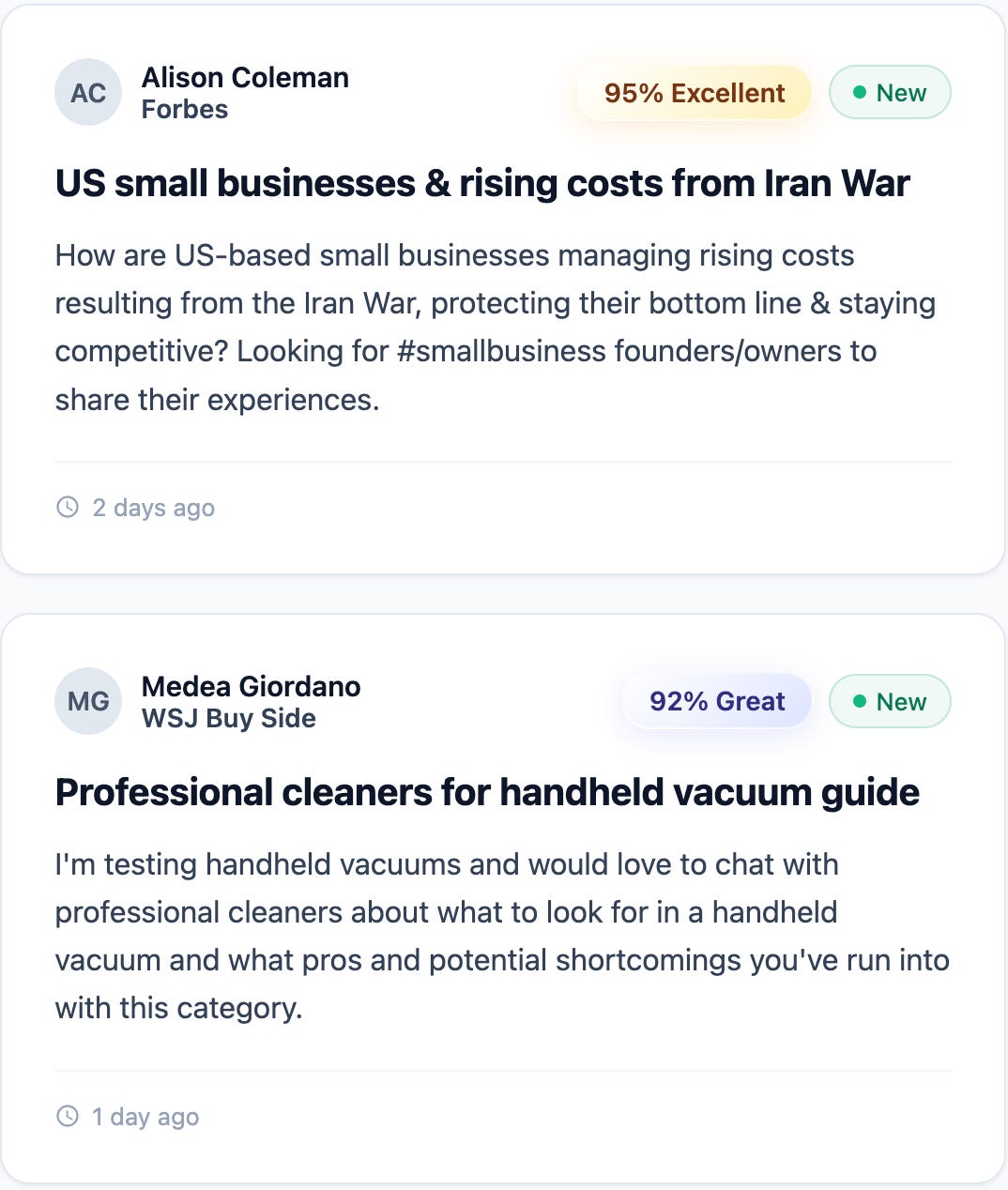
Newshook goes beyond simply looking for keywords—the AI analyzes the full context of each request and matches it to your clients’ expertise. Here’s a look at some recent opportunities the platform found for one user:
PR pros on Newshook are already matching with requests from journalists at:
Forbes · Bloomberg · BBC · NYT · CNN · Wall Street Journal · Vogue · GQ · Cosmopolitan · WIRED · People · Newsweek…
…and hundreds more.
Newshook is offering readers of this newsletter a 3-day free trial (and no credit card is required!), so you can see just how well it can work for you. It will save you tons of time and help you find coverage opportunities you might have missed.
3 AI mistakes every PR pro should avoid
You don’t need me to tell you that AI is powerful. When used thoughtfully, it can speed up your media outreach and help you find research that makes your pitches so much stronger.
But AI should never replace your professional judgment. And that’s exactly what happened in the recent pitch I received (which you can see for yourself if you’re a paid subscriber!).
Here are a few of the biggest AI mistakes I see PR pros making—and how to avoid them.
1. Faking personalization
AI can scan a journalist’s recent articles, LinkedIn profile, and website in seconds. But name-dropping a few headlines with generic observations isn’t the same thing as demonstrating that you actually understand someone’s work.
The pitch I shared above is a perfect example. It referenced several of my stories, but the comments were so vague, they made me feel like this person hadn’t actually read the pieces she referred to. It praised my work without saying anything meaningful about it.
While personalizing a pitch can be an effective way to build rapport with a journalist, I’d much rather a PR pro spend time crafting a compelling story angle than writing empty platitudes about my work. Most of the compliments in this pitch left me baffled—not flattered.
I mean, just look at this sentence from the pitch that inspired this newsletter:
“The hotel-stay opportunity piece and your reporting on how sleep can help when you are sick both land on a practical question: what is actually worth it.”
What does this even mean? I’ve read it at least five times, and I still have no idea.
What to do instead: If you’re going to personalize a pitch, ask AI to help you identify one article that’s genuinely relevant to your client and/or angle. Then read that article yourself and spend two minutes writing a sentence about what resonated with you, what surprised you, or how it naturally connects to your pitch.
2. Leaning on it too hard for your writing
Journalists receive hundreds of pitches per day. If you get lucky enough to capture 2 minutes of their attention, the last thing you want is for them to forget your email the moment they close it.
But that’s exactly what can happen if you use AI to write the whole damn thing, and there’s research to prove it.
In a recent study, researchers at MIT found that 83% of participants couldn’t remember a single sentence from an essay they wrote using ChatGPT just moments prior.
That’s scary stuff. If the people creating AI-generated content can’t remember what they wrote, there’s a good chance those reading it won’t find it especially memorable, either.
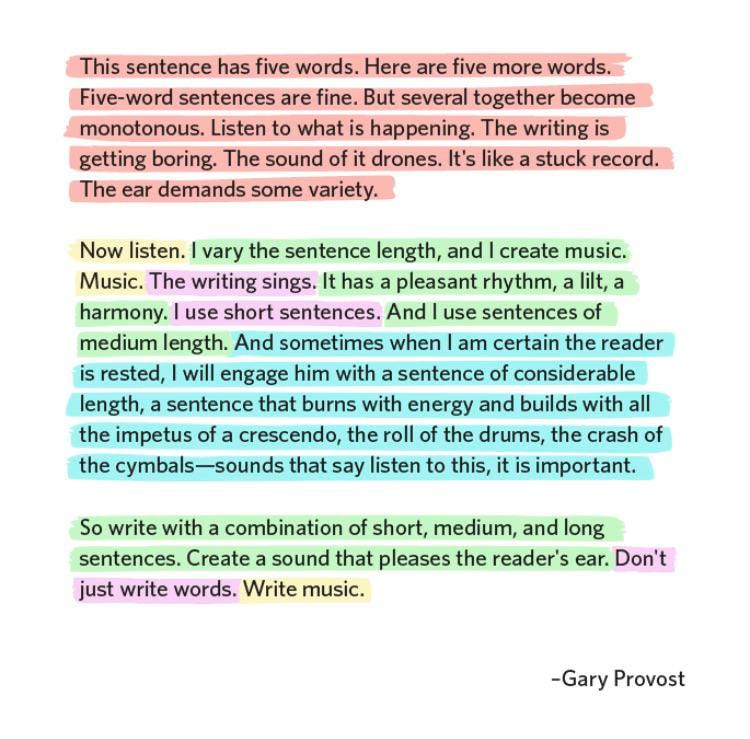
Part of the problem is that AI’s writing can be technically perfect (from a punctuation and grammar standpoint), yet lacks the voice, rhythm, and personality that makes it resonate with readers.
Strong writing has contrast. It mixes long, flowing sentences with short, punchy ones. American writer Gary Provost proves this beautifully in this example, which often floats around in writers’ groups and on social media.
What to do instead: Rather than using AI as a freelance copywriter you don’t have to pay, think of it more as a sparring partner. Write the first draft yourself, then use AI to challenge your thinking, tighten your wording, or suggest stronger transitions. This can be especially helpful if you’re trying to come up with sample headlines to include in your pitch. In your prompt, make sure you tell it which publication you’re targeting so you can generate headline ideas that match the tone of that outlet.
3. Outsourcing your professional judgment to AI
AI is an incredible brainstorming partner. It can generate an endless stream of ideas—but it can’t tell you which ones are actually good. That’s where your expertise comes in.
You have years of training and experience that AI can’t replicate—something many companies discover when they try to automate work that actually requires human relationships and judgment. You know when a compliment sounds genuine instead of forced and when there’s actually something newsworthy to mention in a pitch. You can tell when something doesn’t feel right.
AI doesn’t know any of that. It predicts what sounds right by identifying patterns in the massive amounts of data it was trained on.
The biggest mistake I see people make when they start using AI is trusting it just a little too much—and turning off their own critical thinking.
It’s an easy trap to fall into. ChatGPT, Claude, and other AI tools come across as incredibly confident when they respond to a prompt. That confidence can make mediocre ideas sound genius if you aren’t analyzing them with your own judgment. Knowing when to ignore these responses may be the most valuable AI skill you can develop.
What to do instead: Carefully read and critique everything AI generates before you incorporate it into your own work. Ask yourself:
Do I actually agree with this?
Is this accurate?
Is this something I would actually say to a client or colleague?
If the answer to any of those questions is no, don’t include it in your work. You should stand behind any message you send—even if you didn’t write every word of it yourself.
I know there’s a lot of doom and gloom about AI replacing PR and media jobs. I feel it myself sometimes. But the more I experiment with these tools, the more convinced I become that the most valuable part of our work is the human element—our judgment, our creativity, and our curiosity.
That’s not to say we should ignore AI. Quite the opposite! We should absolutely embrace tools that make our work easier and faster. But when AI replaces your expertise instead of amplifying it, it’s time to rethink how you’re using it.
From the archive:


This is bang on, Joni. I’ve played around with AI to help create pitches and, frankly, it made me sound so dumb. There was no way I’d feel comfortable sending the generic word salad it would always generate. I’d rather write my own thoughtful pitches, even at the risk of an occasional grammatical error.
Thanks Joni. I’m trying to be more efficient and messing with AI. For pitching, it’s just too perfect with complete thoughts without my missed periods and such. A former client was using it so often to write newsletters that it would give me hives. This is not your voice - Id say. It’s a difficult moment when some businesses encourage its use. I do like the aspect of it doing daily assignments for me and scan for bits of information across the web. Secondly I now want to read books more to challenge my mind. Still testing. How’s your wrist? -MK